
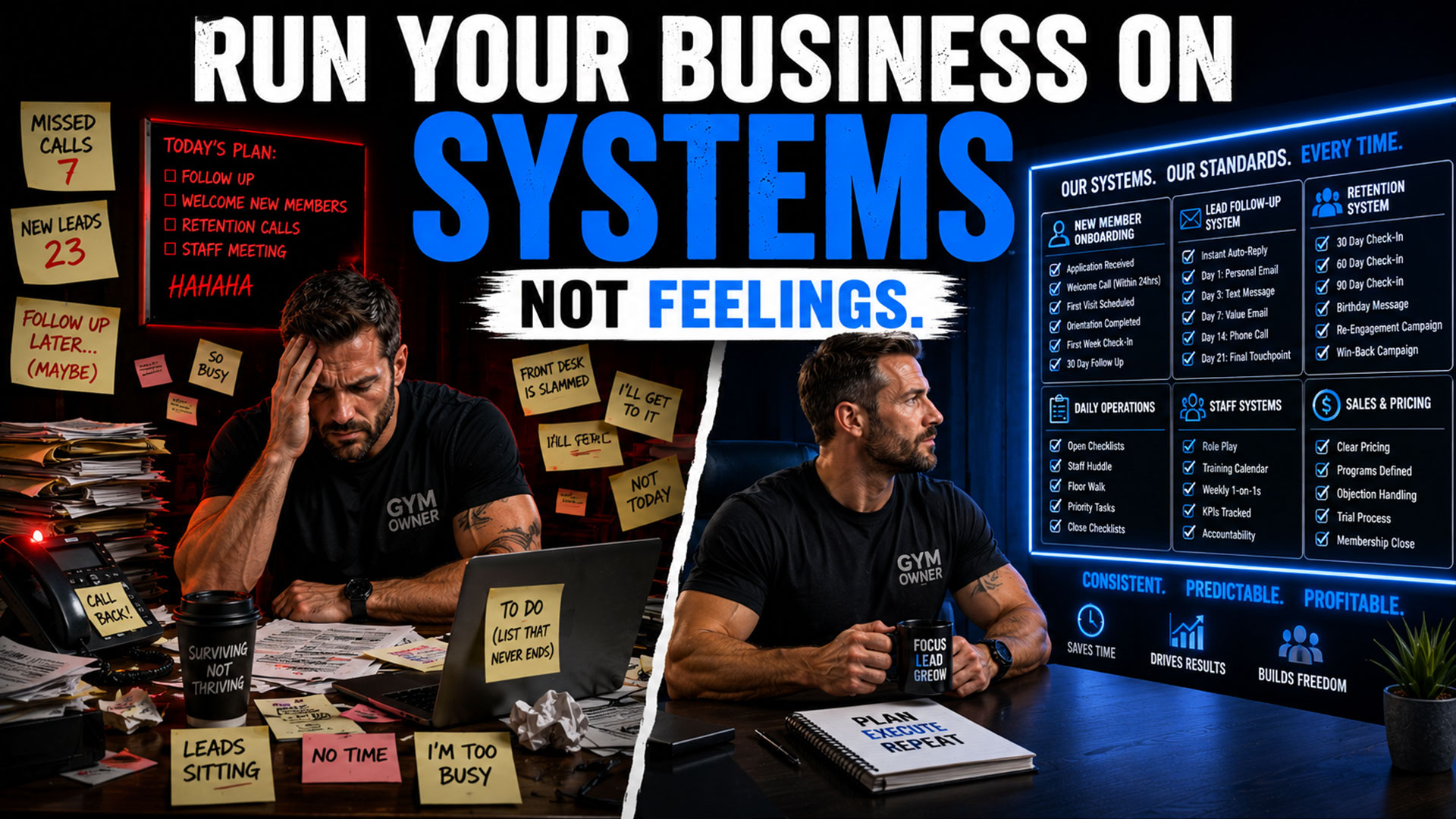
Feelings are honest. They’re also a terrible way to run a Tuesday.
If you’ve trained for any length of time, you already understand systems better than you think. You don’t walk in and decide how you feel about squatting today. You follow the program. The program was written on a clear day, by somebody thinking straight, so that on the tired day, the sore day, the unmotivated day, you still do the work. The program protects you from your own moods.
Your business needs the exact same thing, and most owners never build it one. They run on feel. Whether a lead gets followed up depends on how the morning went. Whether a new member gets a real welcome depends on how slammed the front desk feels that hour. Pricing, scheduling, who gets a call back, all of it floating on mood. And mood is the one input you can’t control.
I ran my place on feelings for years and called it being flexible. Some weeks the follow up was sharp because I was fired up. Some weeks it didn’t happen at all because I was buried, or just off. My members couldn’t tell what they were going to get from me. Honestly, neither could I.
A system is just a decision you made once, on a clear day, written down, so you don’t have to make it again every day when you’re tired. The new member’s first week shouldn’t ride on your mood. It should be a checklist that happens every time, the same way, whether you’re in the building or not. Follow up shouldn’t wait for motivation. It should be a sequence that fires on a schedule. You build the decision once and then you stop re-deciding it, the same way the program decides your training so you don’t argue with yourself at six in the morning.
This is also how you ever get a day off. A business that runs on your feelings needs you to feel like working, every day, forever. A business that runs on systems keeps running when you’re sick, distracted, on vacation, or just human. The system is what lets the gym be good on the days you can’t be.
Feelings still matter. They tell you when something’s wrong. They tell you when to care harder. They keep you human with your people. Just don’t hand them the schedule. Build the system on a clear day so the tired you, the frustrated you, the distracted you, still delivers the same thing. Your members don’t need you at your best every single day. They need the business to be. That’s what a system is for.